
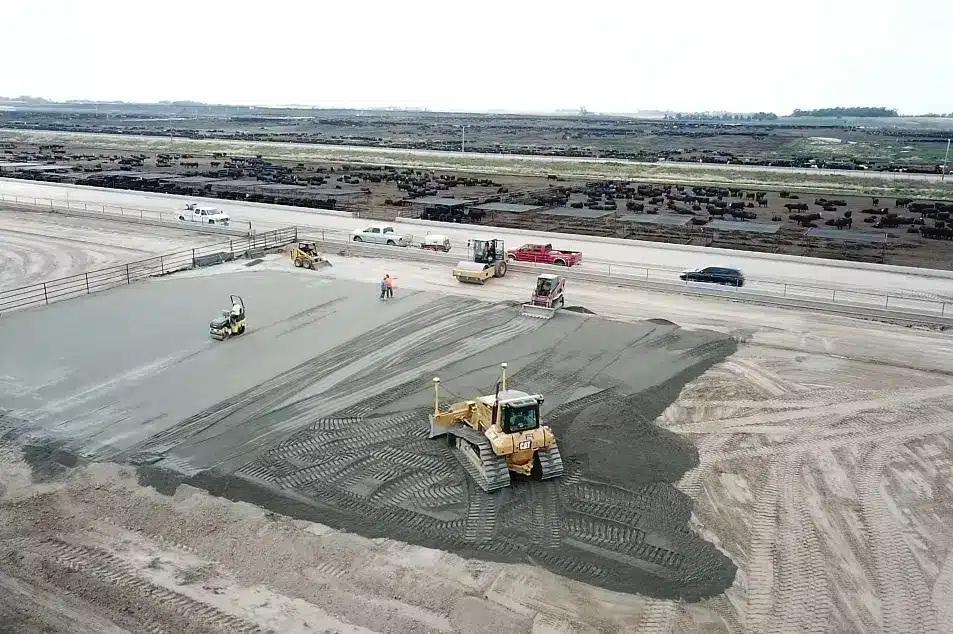
Every beef, dairy, and swine producer knows the daily frustrations of managing heavy-traffic areas. Dirt pens turn into deep mud during wet seasons leading to increased cattle stress, lower average daily gains, and costly hoof health issues like foot rot. While traditional concrete solves the mud problem, the massive upfront cost of materials, rebar reinforcement, and labor often makes paving large lots financially impossible.
Fortunately, there is a better way. At Central Confinement Service (CCS), we are helping producers bridge the gap between high performance and smart budgeting with our Roller Concrete Solutions. Here is why Roller Compacted Concrete (RCC) is rapidly becoming the new standard for agricultural paving.
What is Roller Compacted Concrete?
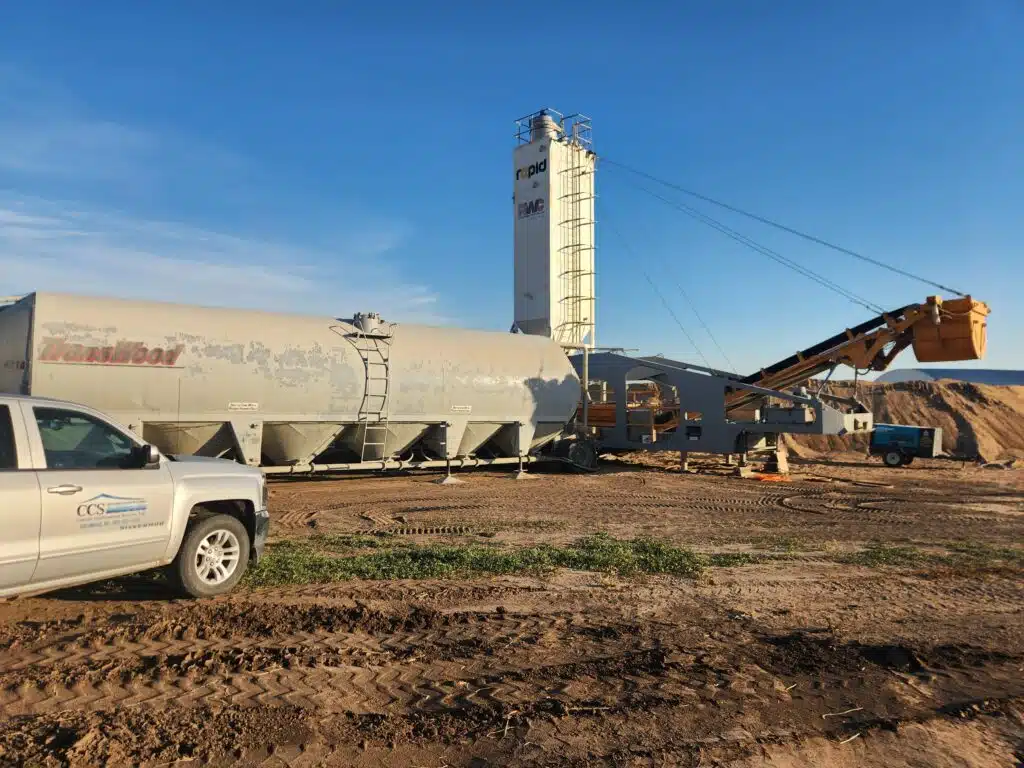
Roller Compacted Concrete is a specialized, zero-slump mix composed of the same basic ingredients as conventional concrete—cement, water, and aggregates. However, the aggregate blend is denser, and the water content is significantly lower.
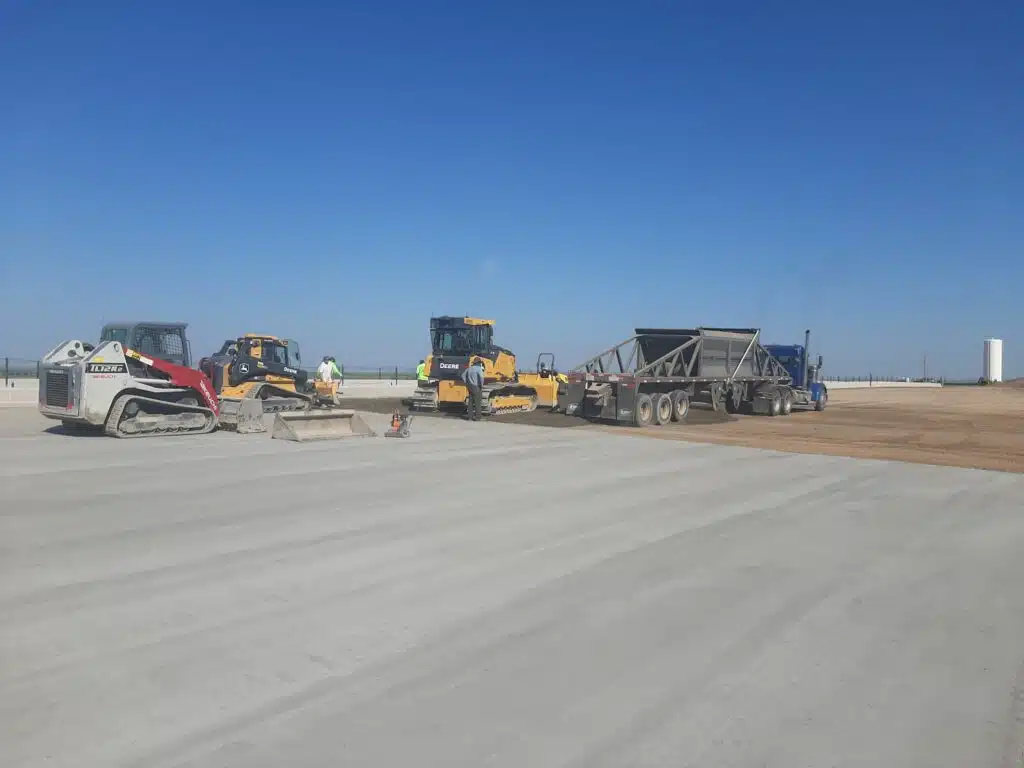
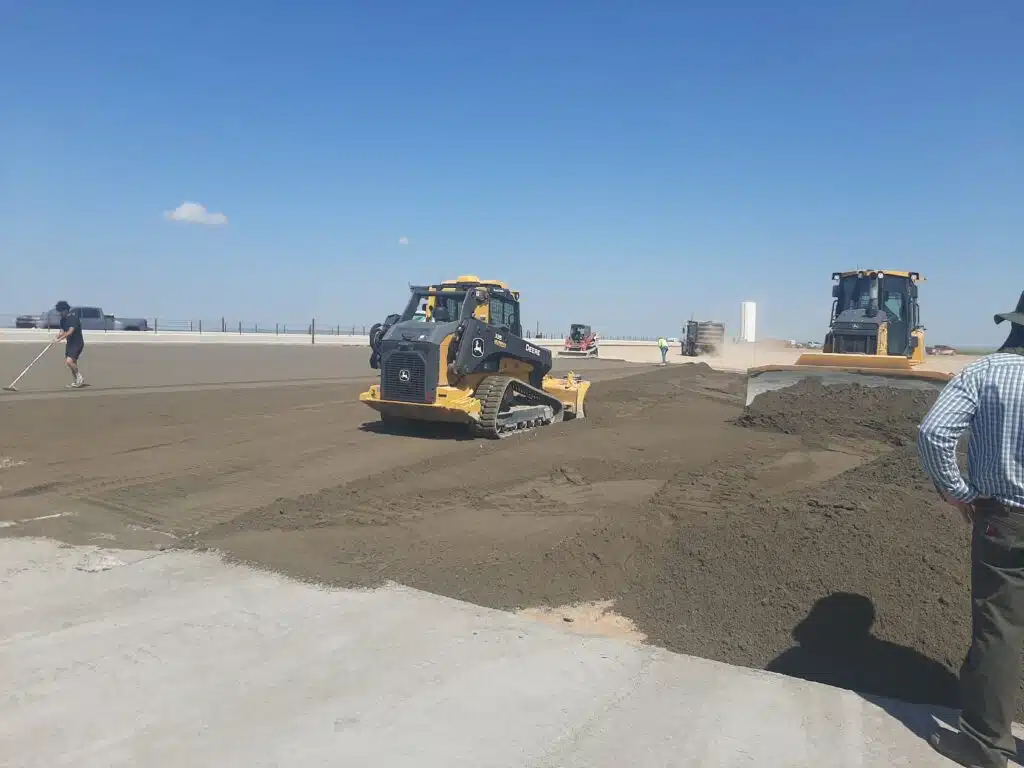
Instead of being poured into wooden forms and finished by hand, RCC is placed using heavy-duty asphalt pavers and compacted using heavy, vibratory rollers. This mechanical compaction creates a high-density, ultra-strong surface that cures rapidly without requiring rebar, wire mesh, or formwork.
Where Does RCC Work Best?
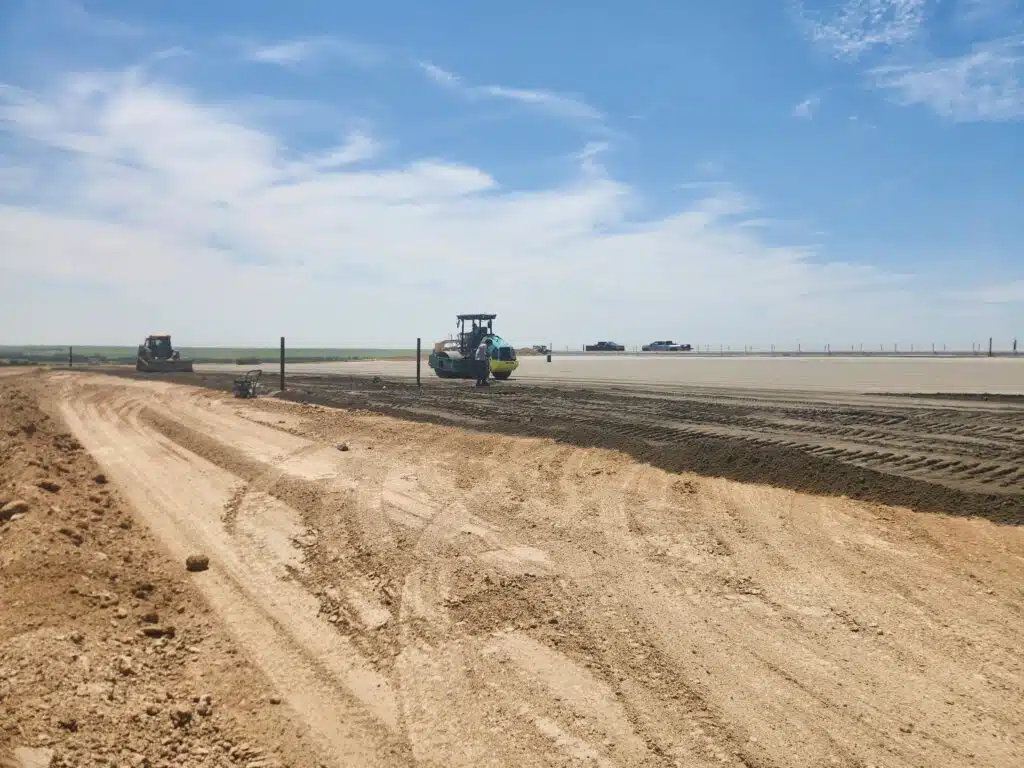
Roller Concrete Solutions are ideal for high-traffic, large-scale agricultural footprints, including:
- Open cattle feedlots and holding pens
- Silage pads and commodity storage bays
- Heavy equipment traffic lanes and driveways
- Manure storage areas and scraping alleys
The Four Big Benefits for Agricultural Operations
1. Massive Financial Savings (20% to 40% Less)
The most compelling reason to choose RCC is the bottom line. By eliminating the need for expensive forms, finishing crews, and steel reinforcement, labor costs drop drastically.
On average, producers save 20% to 40% compared to traditional concrete placement, allowing you to pave larger areas for the exact same budget.
2. Rapid Installation and Minimum Downtime
Time is money on a farm. Traditional concrete can take weeks to form, pour, finish, and fully cure. RCC is laid at blistering speeds, often covering multiple acres in a single day. Because it is highly compacted during installation, it gains strength fast.
In most cases, light equipment can drive on it immediately, and heavy machinery or cattle can return to the surface in as little as 24 to 48 hours.
3. Unmatched Durability Against Heavy Scraping
Agricultural paving takes a beating. Between heavy feed wagons, skid steers, and continuous scrape-cleaning, surfaces wear down quickly.
RCC thrives under heavy loads. Its high compressive strength easily resists the aggressive scraping required for proper manure management, preventing the gouging and pitting common with asphalt or low-grade concrete.
4. Improved Herd Health and Safety
Animal welfare directly impacts your profitability. Muddy pens require cattle to expend extra energy just to move, dragging down feed efficiency. Furthermore, wet and uneven surfaces invite injury. RCC provides a uniform, solid surface.
The compaction process leaves a naturally textured, non-slip finish that gives cattle excellent hoof traction, lowering stress levels and reducing slip-and-fall injuries.
Roller Compacted Concrete (RCC): Frequently Asked Questions?
How does RCC handle freezing winters and aggressive freeze-thaw cycles?
Extremely well. Because RCC has a very low water-to-cement ratio and is mechanically compacted to maximum density, there is very little internal moisture trapped inside the slab. This structural density prevents water from soaking deep into the concrete, which drastically reduces the risk of cracking, scaling, or popping during harsh winter freeze-thaw cycles.
Can you scrape manure off RCC with heavy equipment without damaging the surface?
Yes. RCC is engineered to withstand heavy, continuous abrasive scraping from skid steers, loaders, and box scrapers. Unlike asphalt, which softens in hot weather and gouges easily under a steel blade, RCC maintains a rock-hard, high-compressive-strength surface that stands up to daily manure management.
Does RCC require rebar or wire mesh for reinforcement?
No. Traditional concrete relies on steel rebar to prevent cracking under heavy loads because it is poured wet. RCC gains its massive load-bearing capacity from its aggregate interlock and high-density compaction. This eliminates the material and labor costs of tying steel, while removing the risk of buried rebar rusting out over time.
What does the finished surface look like? Is it safe for cattle hooves?
The finished surface looks similar to a coarse asphalt or a heavily textured traditional concrete. It is not glass-smooth, which is a major benefit for livestock. The natural micro-texture provides excellent slip resistance and hoof traction, keeping cattle secure even when the surface is wet or slick.
How thick is an agricultural RCC slab typically laid?
For most heavy-duty agricultural applications—like feedlots, silage pads, and heavy traffic lanes—RCC is laid at a thickness of 4 to 6 inches in a single lift. If an operation requires extreme load capacities for massive industrial equipment, it can be laid even thicker in multiple layers.
How fast can cattle and machinery get back onto the lot?
This is one of RCC’s biggest advantages. Because it is fully compacted during installation, it can support light support vehicles immediately. For heavy feed wagons and cattle herds, the surface is typically ready to go within 24 to 48 hours, keeping your operation’s downtime to an absolute minimum.
The CCS Advantage: True Turn-Key Service
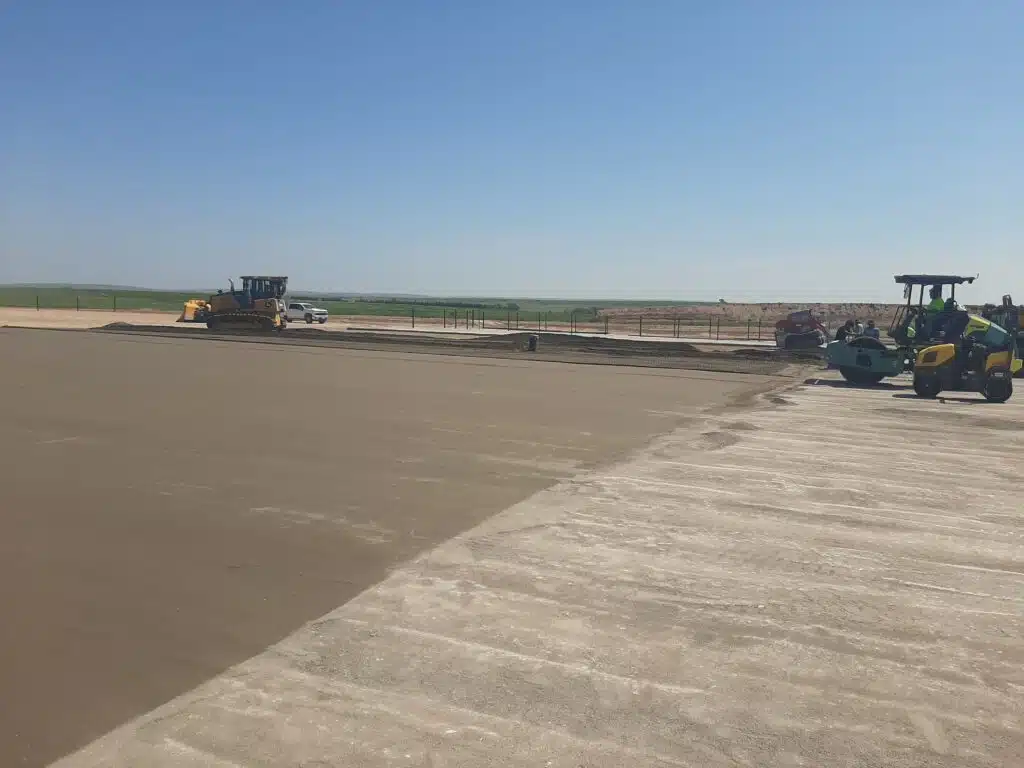
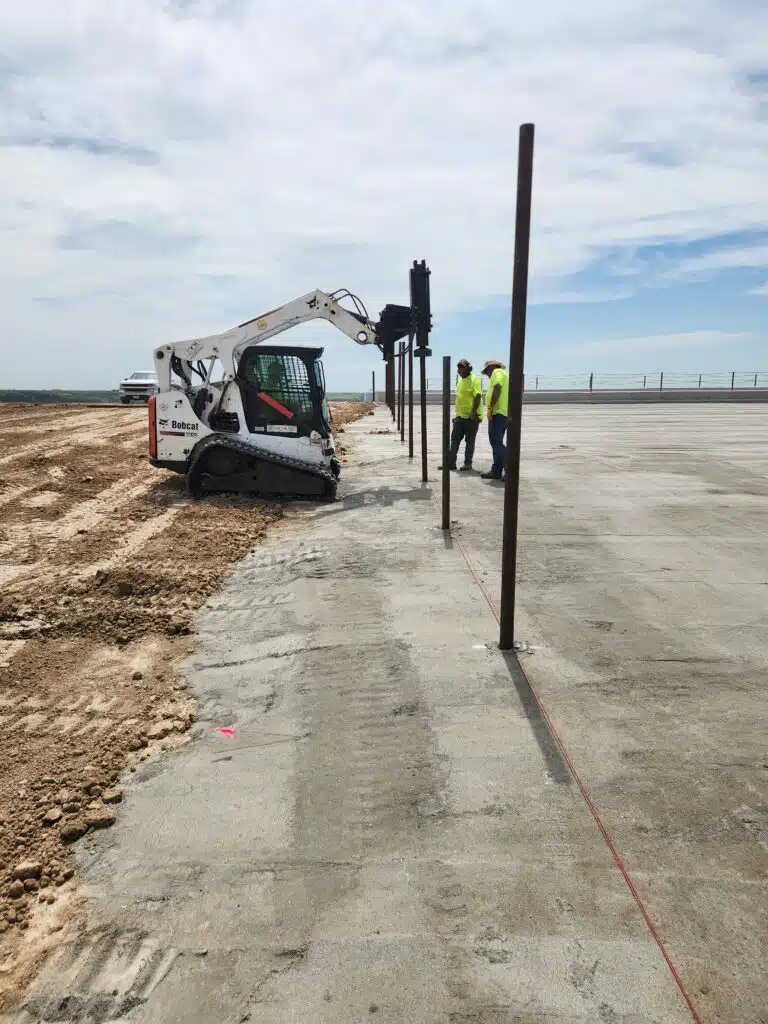
Paving with RCC requires precision engineering, the right mix design, and specialized heavy machinery. As a trusted leader in turn-key agricultural construction, CCS handles the entire process. From initial site evaluation and custom excavation to precision paving and final compaction, our teams deliver an engineered surface built to last for decades.
Stop losing money to mud and high maintenance costs. Invest in a surface that protects your herd, your equipment, and your bottom line.
Let’s Build Together
Ready to see how Roller Compacted Concrete can transform your operation?
Contact:
Joey Hiesterman
Central Confinement Service
402-563-6041
Or, fill out the form below and request a custom quote for your next paving project.